Resources

Straight answers, including the unflattering ones.

Everything below is what the software actually does today. Where it does not do something, that is stated rather than deferred to a roadmap.

Getting started

Four steps to a live set of books

The part that takes longest is deciding what your opening balances actually are.

  1. 01

    Create the company

    Name, financial year and the date your books begin. The chart of accounts, voucher types and numbering series come with it.

  2. 02

    Bring in your opening position

    Opening balances per ledger, party bills outstanding, and stock on hand. The difference is shown as you go, and anything left over is flagged until it is cleared.

  3. 03

    Post the way you work

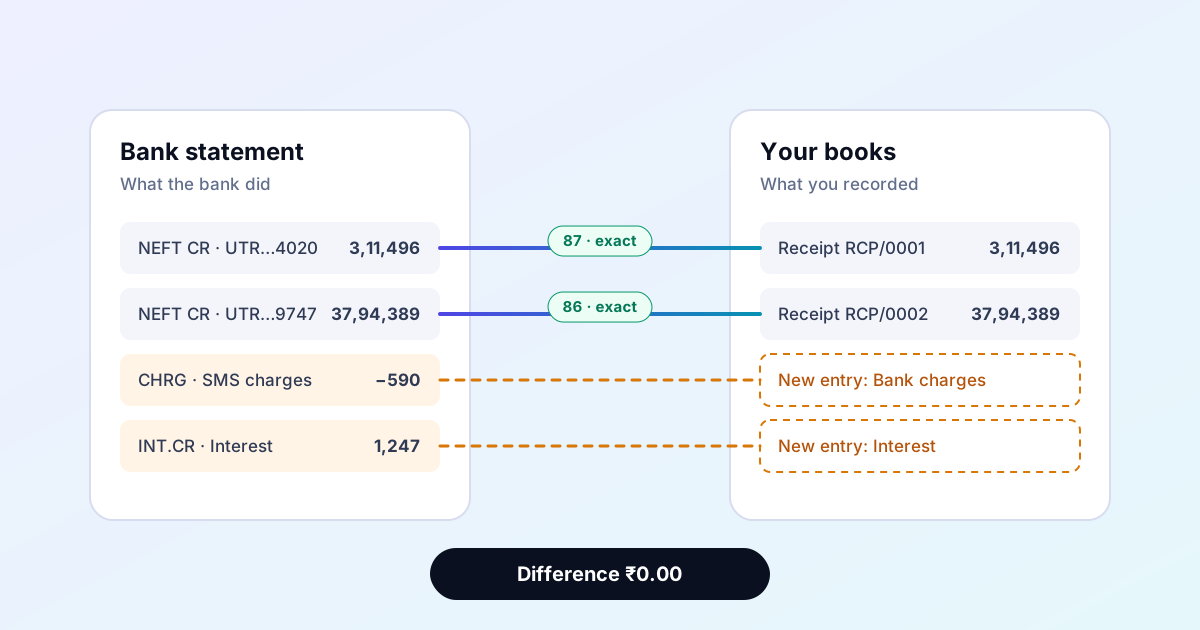
    Sales, purchases, receipts, payments. Or import a bank statement and let your matching rules do the first pass.

  4. 04

    Check, then close

    Run the integrity checks, reconcile the bank, look at the trial balance, close the period.

Guides

Step-by-step guides

The first hour.

Getting started

What do I need before I start?
Your company name, the date your books begin from, and your GSTIN if you are registered. Everything else — the chart of accounts, the voucher types, the numbering series, the financial years — is created for you and can be edited afterwards.
Can I bring in my existing balances?
Yes. Opening balances are entered per ledger against the books-begin date, and the difference between debits and credits is shown as you type. Any difference you leave is posted to an Opening Balance Equity account with a warning, and the integrity checks keep flagging it until it is cleared.
Can I import my masters from a spreadsheet?
Yes, for ledgers, parties, items and opening balances, from a CSV file — save an Excel sheet as CSV first. Every row is checked before anything is written: duplicate codes, unknown groups, malformed GSTINs and rows that would collide with something already present come back as a list you can fix, not as a partial import you have to undo.
Is there something to look at before I commit?
The guides walk through real screens step by step, and the product page shows the main ones. Or create an account and try it with made-up figures first — it is free while in preview, and a company you set up for practice can sit beside your real one.

What your accountant will ask.

Accounting

Is this real double-entry?
Yes. Every transaction is a voucher of balanced lines against a chart of accounts. The balance is checked in the application and again by a constraint in the database, so an application bug cannot write an unbalanced voucher.
How is money represented?
As exact decimals, never as floating point — numeric(20,4) in the database and decimal.js in the application. Floating point arithmetic is the reason a total can come out at 999.9999999, and there is no acceptable version of that in a ledger.
Can I edit a posted voucher?
No. A posted voucher is never edited, before or after the period closes. It is corrected by a reversal, a credit or debit note, or a fresh journal — and a reversal also brings back the stock the original moved and reopens the bills it settled. Drafts can be changed freely until they are posted.
Do the reports agree with the ledger?
They cannot disagree, because they are the ledger. Nothing is cached and no total is stored twice: the trial balance, profit and loss, balance sheet and cash flow are all computed from postings when you ask for them. Forty-one milliseconds over a year of 100,000 vouchers, on PostgreSQL.
What happens when I close a month?
A closed period refuses postings rather than warning about them, after a checklist that looks at the trial balance, unposted entries and serious integrity findings. Reopening one is an explicit act with a reason that lands in the audit trail.

Where the honest answer matters most.

GST and statutory

Does it file my returns?
No. It prepares working papers — GSTR-1 and 3B figures traceable back to the vouchers that produced them — which you or your accountant then file. There is no GST portal credential anywhere in this system and no code path that would use one.
What about e-invoicing and e-way bills?
The integration is written against a provider interface with a sandbox implementation. It produces identifiers marked SANDBOX, the screen states plainly that it is not connected to any government system, and those identifiers must not be issued to customers as real e-invoices.
Is the GST logic reliable?
The place-of-supply and rate logic is covered by tests that assert the resulting ledger entries rather than the printed label, including reverse charge, exports and SEZ. Choosing the composition scheme prints a bill of supply but does not change the tax engine. Rates and rules are configurable defaults, not tax advice. Confirm your position with a qualified accountant.
Can I reconcile against GSTR-2B?
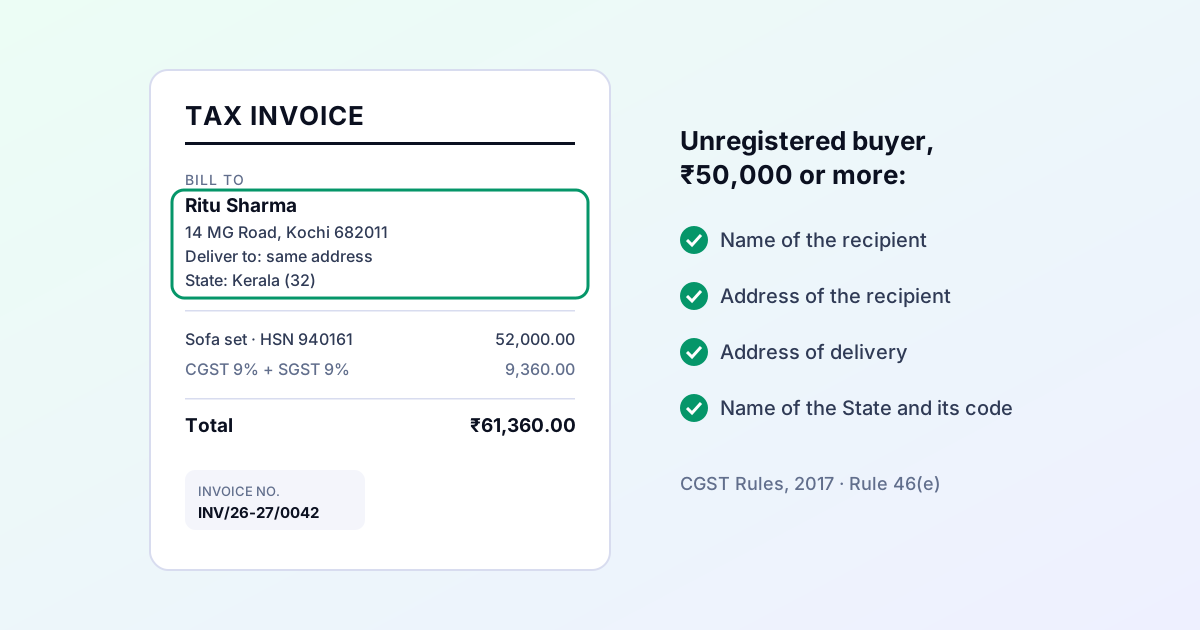
Not yet. There is no screen to import the portal’s 2B file. Purchases can be checked against their purchase orders and goods receipts, and a tax invoice you issue is checked against Rule 46 before it is given a number.

Short answers, with a longer page behind them.

Data and security

Who can see my data?
Only the people you invite, at the role you give them. Every query is scoped to your business and an id from another business is answered as not found; row-level security in PostgreSQL adds a second lock on writes and on posting, and extending it to every read is in progress.
Where is my data stored?
Falcon online stores your books on servers in the United States. They are not stored in India. The Windows desktop application keeps them on your own computer instead; its installer is not published yet.
Can I get my data out?
Reports export as spreadsheets at any time — trial balance, profit and loss, balance sheet, cash flow, day book, receivables, payables, stock summary and the GST working papers — and invoices, payments and the tax summary as CSV. There is not yet a single export of the whole set of books.
What is never stored?
Plaintext passwords, bank credentials, GST portal credentials, API keys in the repository, payroll figures in logs, and card details. The security page lists each one and says why it is absent rather than merely protected.
Does my data go to an AI provider?
Only when an AI provider is configured, and only for the feature you use. Drafting an invoice sends what you typed plus your customer and item names so they can be matched. Asking a question about your books sends the figures worked out to answer it, such as balances and profit. Bank statement lines and payroll records are not sent. On Falcon online no outside provider is configured at present.

Still unanswered?

Accounting questions get accounting answers. Write to us and a person who has read the code will reply.

Contact us

The fastest answer is to try it.

Create an account and post a few made-up entries. Free while in preview, with nothing to install.

Resources · Falcon