GST

GST working papers you can defend

GST is decided at the moment a voucher is posted, from the place of supply and the parties involved — not patched onto a printed invoice afterwards. That is what makes the return data reconcile to the ledger rather than approximate it.

What is in it

What GST covers

Place of supply drives the split

CGST and SGST or IGST is derived from the supplier state, the place of supply and the registration type, evaluated once and stored on the line. Reverse charge, exports and SEZ each take their own path, and each is covered by tests that assert the computed heads and the return figures rather than the printed label. The composition scheme is not one of those paths: you can record the registration type and print a Bill of Supply that suppresses the tax columns and carries the declaration, but choosing it changes nothing the tax engine does, and the dealer’s own turnover tax is not computed.

Working papers, per return

GSTR-1 and GSTR-3B figures and the HSN summary, assembled from the postings and broken down so every total can be traced back to the vouchers that produced it. You can hand the working paper to an accountant and they can check it — which is the whole point.

A tax invoice is checked before it gets a number

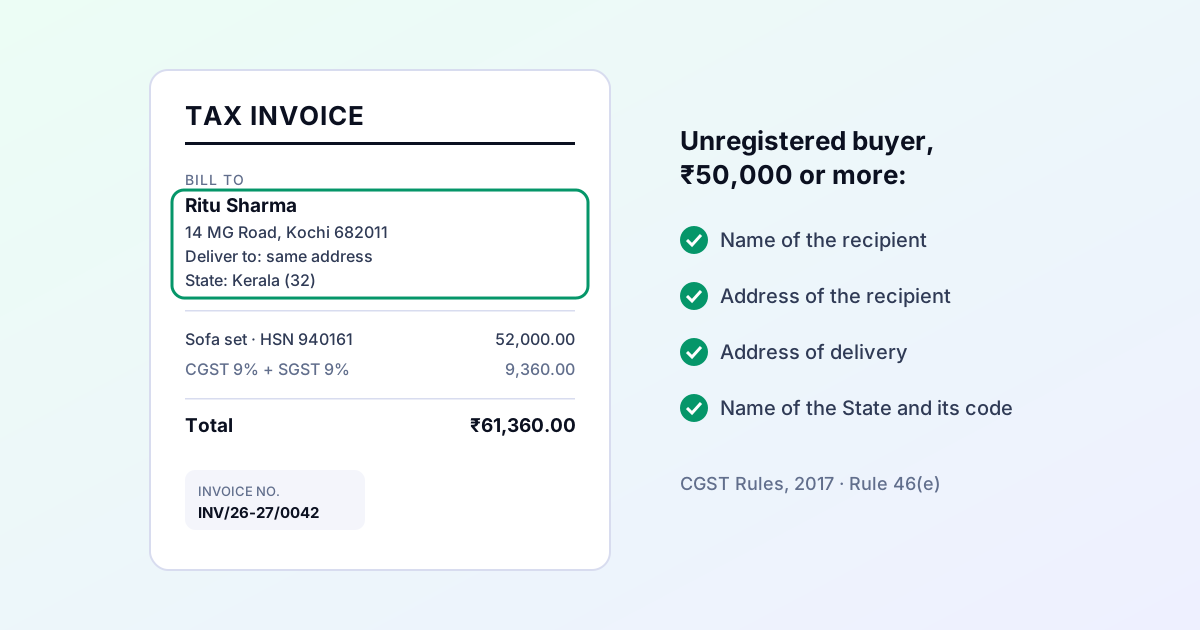
Finalising checks your GSTIN and the buyer’s against their check digits, the place of supply, an HSN or SAC code on every line, and — for an unregistered buyer on an invoice of ₹50,000 or more — the name and address Rule 46 asks for. A draft that fails says exactly what is missing and stays a draft.

E-invoicing and e-way bill, honestly

The integration is written against a provider interface with a sandbox implementation. It produces SANDBOX identifiers, the screen says so in as many words, and nothing is transmitted to any government system. When a real provider is connected it will be behind explicit consent, a confirmation screen and an idempotency key — none of which exist to be bypassed.

Checkable

What backs each claim

Where in the product, or in the repository, you can go and see it for yourself.

Rate and place-of-supply logic covered by unit tests
npm run test
GSTIN check digit validated on entry and at finalising
Customers · Invoices
No government connection, stated on screen
Tax → E-invoicing

What it deliberately does not do

  • Nothing is filed with the GST portal. There is no filing credential anywhere in this system, and no code path that would use one.
  • Identifiers produced by the e-invoicing screen are marked SANDBOX and must not be issued to customers.
  • There is no GSTR-2B import or matching screen yet. Purchases can be checked against orders and goods receipts, not against the portal.
  • Rates and rules are configurable defaults, not tax advice. Confirm your position with your accountant.

Guides

Step by step: GST

Try GST against real books.

Create an account and try it with made-up figures first. Free while in preview, with no card.

GST working papers you can defend · Falcon